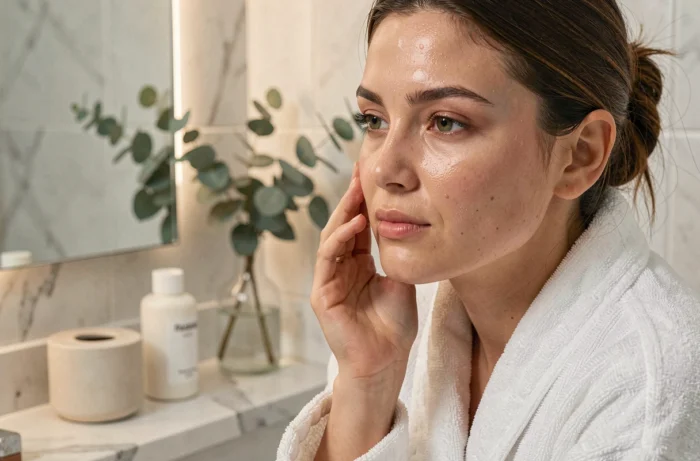
The beauty trends of 2024 are not just a list of fashionable colors or cuts. Behind each movement (multifunctional makeup, clean skincare, AI diagnostics), there lies a rarely asked question: do these trends emerge from real consumer preferences, or are they shaped by regulatory constraints and industrial strategies that the general public does not perceive?
Reformulation of cosmetics: what European regulation really imposes
Most beauty reviews of the year focus on textures, looks, and star launches. They overlook a much more structural driver of transformation: the European regulation on microplastics now requires manufacturers to reformulate part of their ranges.
This constraint is not limited to packaging. It affects the very composition of products, their texture agents, and their stabilizers. The regulatory timeline imposes a trajectory of gradual reformulation, which means that several products presented as “new formula” in 2024 are primarily responding to a legal obligation, before being a marketing choice.
Environmental regulation shifts part of the costs onto cosmetic manufacturers. As a result, some brands are repositioning their ranges towards the “clean” or “natural” segment not out of ecological conviction, but because compliance is cheaper with simplified formulations. By following the news on Beauty Girl, one can see how much these repositionings have accelerated over the months.
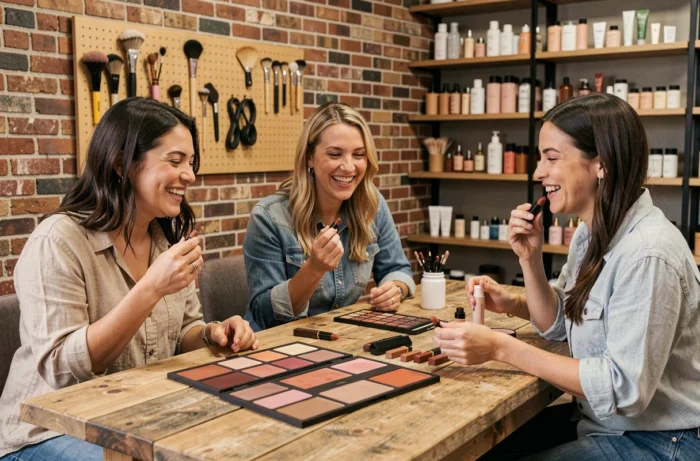
PFAS in makeup: a compliance risk that brands anticipate
PFAS (per- and polyfluoroalkyl substances) remain a discreet topic in mainstream beauty press. These compounds serve as film-forming agents, stabilizers, or antistatics in some European makeup products.
Their restriction is underway at the European level, and several national initiatives are accelerating the movement. For brands, this means checking not only the raw materials used voluntarily but also the unintentional contaminations in the supply chain.
This technical point partly explains the rise of minimalist formulations and short ingredient lists highlighted this year. It is not solely a response to consumer demand for more transparency; it is also a strategy to reduce regulatory risk.
| Change Factor | Perceived by the consumer as | Main motivation for manufacturers |
|---|---|---|
| Restriction of microplastics | “More natural” formula | Regulatory compliance |
| Monitoring of PFAS | “Clean” makeup | Reduction of legal risk |
| Increase in compliance costs | New formats (sticks, multifunctional) | Industrial optimization |
| AI and virtual try-on | Personalized experience | Reduction of returns and cross-selling |
Stick makeup and multifunctional formats: trend or industrial optimization
Sticks and multifunctional solid formats (blush-lips-eyes) are among the most visible launches of the year. Their success is documented by the volume of new products brought to market, not just by their virality on social media.
A solid format reduces the need for suspension agents and emulsifiers subject to new restrictions. It also simplifies packaging and decreases logistical weight. These industrial advantages converge with a real consumer demand for shorter routines and portable products.
The multifunctional trend illustrates well the mechanics of 2024: when regulatory constraints, economic interests of the manufacturer, and consumer preferences point in the same direction, adoption is rapid. Conversely, when regulation pushes for a reformulation that the consumer does not perceive (like the removal of an invisible stabilizer), the change occurs without communication.
What ingredient lists do not yet reveal
The current labeling does not mention the regulatory origin of a formula change. A consumer reading “microplastic-free” on packaging does not know if the brand has preempted regulation or if it is complying at the last minute. This asymmetry of information fuels marketing discourse around “clean beauty” without allowing the consumer to distinguish voluntary commitment from mere compliance.
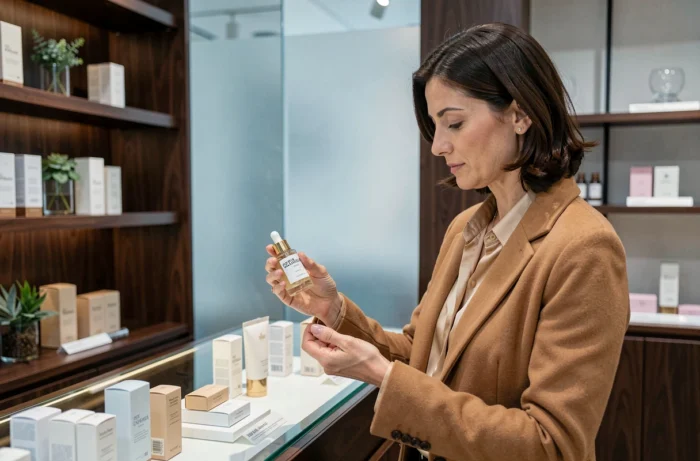
Artificial intelligence and beauty diagnostics: personalization as a commercial lever
Virtual try-ons and algorithmic personalization have multiplied in 2024. AI reduces dependence on in-store testing and facilitates the recommendation of complementary products, mechanically increasing the average basket size.
However, this technological deployment remains absent from most editorial reviews of the year, which prefer to talk about shades and textures. The technological angle deserves to be analyzed for what it reveals:
- AI diagnostics guide the consumer towards targeted treatments (skin, body, hygiene) based on visual data, favoring high-margin ranges
- Algorithmic personalization creates a perception of custom-made that fosters loyalty without requiring real formula innovation
- The data collected during virtual try-ons feed cosmetic companies’ strategies to anticipate upcoming launches
The cosmetics market thus integrates AI not as an aesthetic trend but as a commercial optimization tool disguised as customer service.
Skincare and natural origin ingredients: demand is real, the framework remains unclear
The demand for products made from natural origin or sustainably certified ingredients is not artificial. Consumers are increasingly consulting compositions, comparing labels, and seeking skincare with short ingredient lists.
The problem lies in the absence of a harmonized regulatory definition for terms like “clean,” “natural,” or “sustainable” applied to cosmetics. Each brand defines its own criteria, making it difficult for consumers to compare products.
This gray area benefits brands that invest in environmental storytelling without measurable commitments. It penalizes those that genuinely reformulate their ranges, as the effort is not visible in a shelf where everyone claims the same thing.
The beauty trends of 2024 can be better understood as the product of a triangle between regulation, industrial strategy, and consumer preference. The data that summarizes the year can be stated in one sentence: the majority of visible reformulations primarily respond to legal obligations, and marketing transforms this constraint into a selling point. Consumer choice operates on a terrain already mapped out by decisions that largely escape them.