
ASOS directly distributes third-party brands (Ralph Lauren, Calvin Klein, Lacoste) through wholesale agreements, but also operates a marketplace where independent sellers list their own stock. This distinction, rarely made explicit in product listings, affects the level of quality control applied to each item. Knowing which channel you are purchasing from is the first anti-counterfeiting filter.
Labeling and technical marking: details that a fake does not reproduce
On an authentic garment sold via ASOS, the inner label follows a precise pattern. The textile composition is indicated in exact percentages, in accordance with European regulations on textile labeling. A fake often features rough rounding or omits certain secondary fibers.
The RN (Registered Number) is a reliable marker for brands distributed in the United States. Ralph Lauren, Calvin Klein, or Tommy Hilfiger place this number on their labels, which can be verified in the Federal Trade Commission’s database. Its absence on an item purportedly from these brands is a strong signal.
The stitching securing the main label also deserves examination. On an authentic Lacoste product, the label is sewn with thread matching the supporting fabric, never heat-pressed. Counterfeits frequently use low-quality heat-pressing that peels off after a few washes. We also recommend checking the consistency of the typography: blurry lettering or irregular spacing between characters betrays a handmade reproduction.
To deepen these checks before placing an order, the ability to recognize a genuine or fake ASOS largely relies on careful reading of these micro-labeling details.
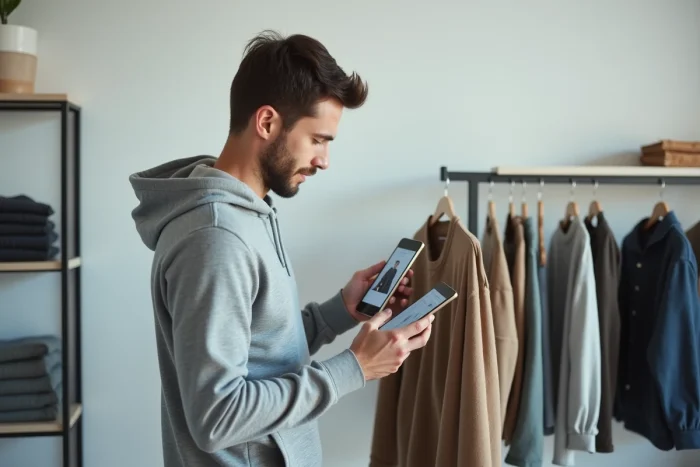
Direct ASOS seller or marketplace: impact on counterfeiting risk
The majority of items displayed on the main site (asos.com) come from ASOS’s own stock, purchased wholesale from brands or produced under in-house lines (ASOS DESIGN, ASOS EDITION). On this channel, the risk of counterfeiting remains marginal because the supply chain is controlled internally.
The risk increases on ASOS Marketplace, where independent third-party sellers list their products. ASOS has recently implemented a zero-tolerance policy on counterfeits in this space: immediate suspension of the seller’s account, removal of listings, and reporting of information to rights holders or authorities.
In practice, we observe that this policy does not prevent the temporary listing of suspicious items before detection. ASOS deploys image recognition tools and automatic comparison with official brand visuals, but no algorithmic filter achieves total reliability. The buyer must identify the origin of the item before confirming the cart:
- An item sold and shipped by ASOS has an explicit mention in the product listing, with no reference to a third-party seller.
- A Marketplace item displays the name of the independent seller, with a link to their store and ratings.
- ASOS DESIGN, ASOS EDITION, or Collusion items are in-house lines, manufactured for the platform, and are not subject to external counterfeiting on the site itself.
Price verification and warning signals on reseller sites
A price that is half the catalog rate is the most reliable signal of a counterfeit. Brands like Lacoste or Ralph Lauren maintain stable pricing structures, even during sales. ASOS applies framed discounts, rarely exceeding a significant reduction on the initial price for these premium brands.
Third-party sites claiming to resell items “purchased on ASOS” at rock-bottom prices exploit the platform’s reputation without any contractual link to it. Several indicators can help identify them:
- The URL does not match the official domain asos.com or verified regional subdomains (asos.fr, asos.de).
- The product visuals are identical to those on the ASOS site, but the description contains errors, approximate translations, or size inconsistencies.
- The payment method offered excludes buyer protection solutions (PayPal, credit card via 3D Secure) in favor of direct transfers or cryptocurrencies.
The European Digital Services Act has strengthened the responsibility of marketplaces in the fight against counterfeits since its implementation. ASOS, as a platform operating in the European market, is required to remove reported illegal content within strict deadlines. This regulatory pressure has accelerated the deployment of the automated filters mentioned above.
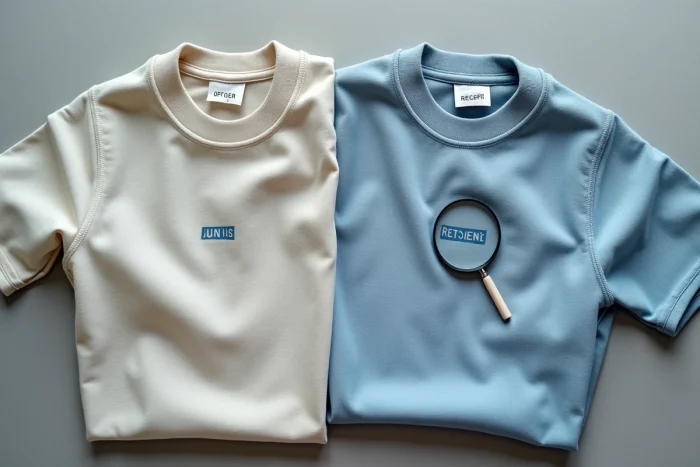
ASOS customer reviews: extracting useful information from noise
The reviews published on ASOS product listings are moderated but not verified for purchase authenticity. A review mentioning a quality issue (loose stitching, thin fabric, poorly positioned logo) does not prove counterfeiting, but a cluster of similar remarks on the same item warrants caution.
We recommend filtering reviews by low ratings and looking for specific mentions: discrepancy between the site visual and the product received, missing label, non-compliant packaging. These factual returns carry more weight than a general assessment of value for money.
On specialized forums (Reddit, sneaker communities), users regularly share photo comparisons between items purchased on ASOS and versions obtained in official stores. These comparisons often focus on sneakers (New Balance, Nike) and reveal minimal discrepancies on pieces coming from ASOS’s direct stock, confirming their authenticity in the vast majority of cases.
The best reflex remains to cross-check the ASOS product listing with the official catalog of the brand in question. Any divergence in product reference, exact color, or textile composition should trigger a verification with ASOS customer service before purchase. The platform has a dedicated reporting channel for suspicions of counterfeiting, accessible from each product listing on the marketplace.