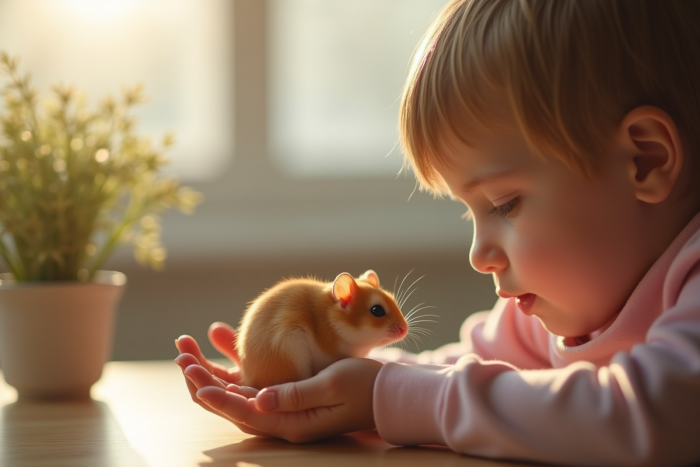
A tiny animal requires up to two hours of daily attention to ensure its well-being. The slightest neglect can lead to serious, even fatal health issues in just a few days. Despite their docile appearance, these rodents quickly develop escape or aggressive behaviors under repeated stress.
Their accelerated life cycle confronts them early on with illness, reproduction, and death. Feeding guidelines vary by species, and any misinterpretation exposes them to immediate deficiencies. The associated responsibilities often exceed initial expectations.
Why Raising a Hamster Transforms Children’s Daily Learning
Caring for a hamster disrupts the child’s educational routine. This small, nocturnal, and solitary animal immediately demands respect for its natural needs. The child adapts, discovers the world of silence, and observes the discreet life that awakens at dusk. Two qualities emerge: patience and observation. Fragile and reactive to the slightest change, this rodent requires constant attention.
Here are the requirements to provide it with a suitable living environment:
- A spacious cage, at least 80×50 cm, for it to thrive
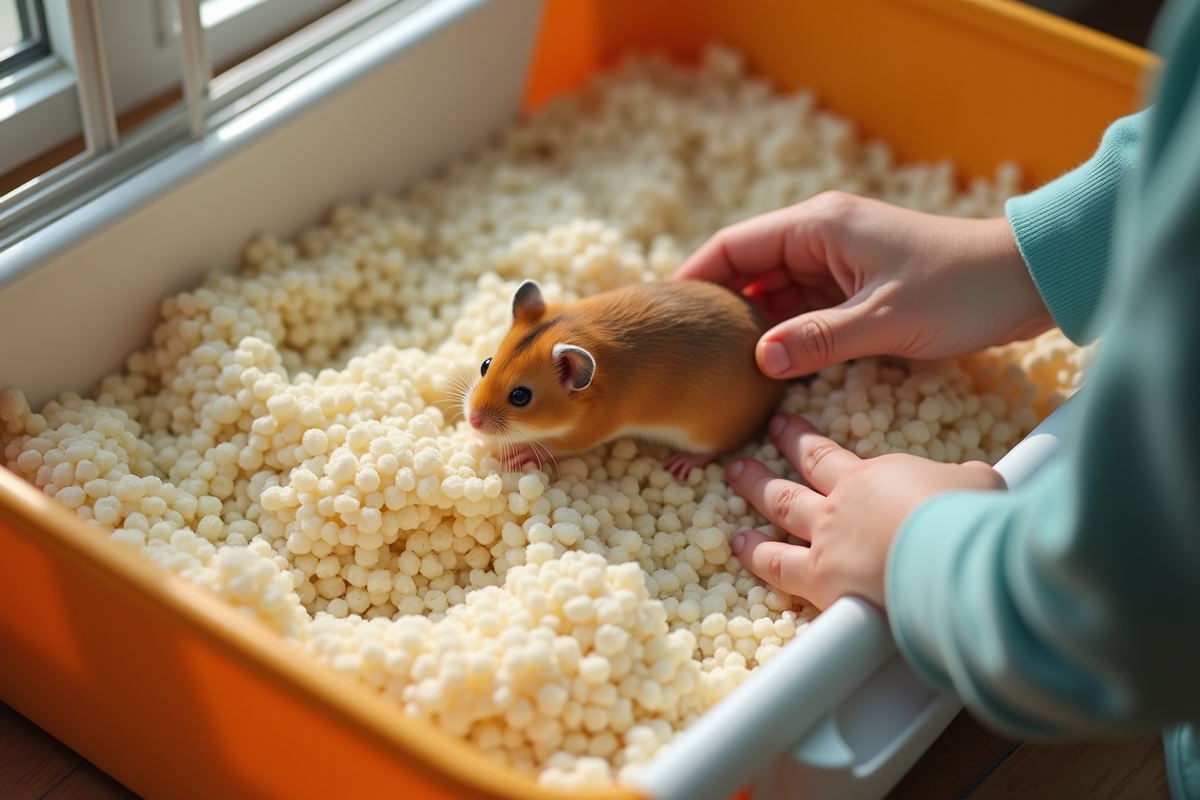
- A bedding that needs to be changed regularly to limit health risks
- A varied diet, mixing seeds, fruits, fresh vegetables, and an intake of animal proteins
Daily life takes on a new dimension. Changing the water, cleaning the cage, monitoring the hamster’s general condition: each task becomes part of a demanding routine that develops responsibility and autonomy. The child learns to spot warning signs: decreased appetite, unkempt fur, reduced activity. Raising a hamster is not an experience for the youngest, who are often too quick to disturb it or force contact during its rest. It is better to entrust this task to a child capable of gentleness and consistency.
Beyond the actions, this experience raises concrete questions. Why does this rodent prefer solitude? What does its nocturnal activity imply? How can one distinguish a golden hamster from a dwarf hamster? Understanding the sex of hamsters, a topic explored in the article “The Particularities of Sex in Hamsters – Espace Animaux,” stimulates curiosity, encourages further inquiry, and nurtures a scientific approach. Gradually, the child builds a relationship based on listening to living beings and respecting their needs.
Responsibility, Empathy, and Autonomy: Key Skills Developed Through This Experience
Raising a hamster at home reveals a part of maturity in the child. Confronted with a nocturnal, discreet, and fragile animal, they understand what responsibility means. Admiring their rodent is not enough: they must anticipate its needs, remain attentive to warning signs such as loss of appetite or dull fur, maintain the cleanliness of the cage, and refresh water and food daily. These repetitive and concrete tasks forge regularity.
Gradually, empathy and respect for the animal take root. Hamsters, whether golden or dwarf, cannot tolerate haste or roughness. The child adjusts their actions, learns not to wake it during the day, and observes its reactions to understand its limits. This relationship requires gentleness and listening, opening the way to discovering the other, in its differences, its need for space, and tranquility.
Daily life is organized around simple yet crucial actions: changing the bedding one to two times a week, providing appropriate toys and shelters, monitoring meal composition while systematically avoiding dairy and sugary products. Caring for a hamster also means recognizing the first signs of illness and knowing when to consult a veterinarian.
Over the weeks, the child gains autonomy. They organize their tasks, anticipate needs, and adopt a ritual that is not left to chance. It is a concrete learning experience, far from abstract discussions, where every action counts for the rodent’s health. The relationship that develops is no longer limited to owning a pet: it becomes a field of learning, demanding, educational, rich in discoveries and nuances.