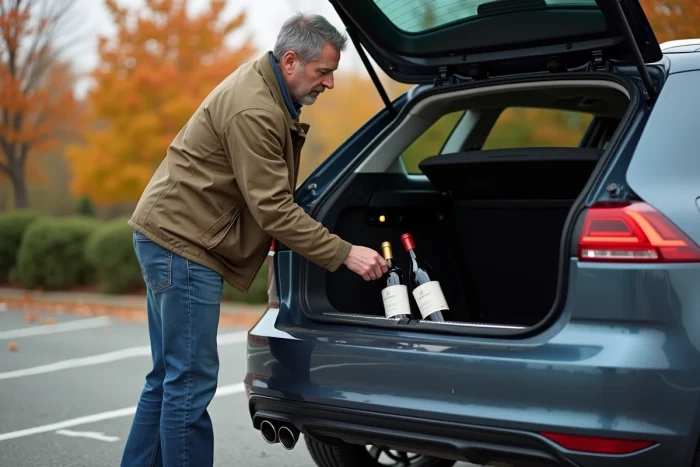
120 bottles of wine in the trunk, and the law keeping watch. Transporting wine by car is nothing exotic, but French legislation regulates every movement to avoid the temptation of illegal trade or suspicious cargo. Here, the threshold is 90 liters: beyond that, enhanced checks, risk of confiscation, hefty fines. And if the journey exceeds France, other rules come into play, with each country guarding its own customs limits and procedures.
Transporting wine by car: what the law says in France
The regulations for transporting wine by car apply to everyone: individuals, collectors, enthusiasts, or professionals, every bottle traveling on French roads must comply with the legal framework. Taking a few cases for a reception or vacation, why not? But beware of the volumes: the legislation leaves no room for improvisation.
In France, you must be at least 17 years old to transport alcohol, including wine. Otherwise, customs can seize the goods on the spot. The fundamental principle: transport must remain for personal use. It is under this condition that the limit rises to 90 liters per vehicle, or 120 standard bottles, whether the purchase was made in France or within the European Union. Always keep the receipt: it serves as proof in case of a check and confirms that the destination is indeed private.
Checks can occur at any time: law enforcement verifies the quantity loaded, the driver’s age, purchase documents, and ensures that the wine is not intended for sale. Exceeding the limits or traveling without justification? The fine is imposed, not to mention the risk of confiscation of the wine, or even the vehicle. Professionals, on the other hand, must declare movements, provide an EAD (electronic administrative document) for any transport within the EU, and comply with tax regulations and labeling.
The European Union is attempting to harmonize these rules, but each country retains control over its own thresholds and formalities. In short, a cross-border trip requires vigilance: customs duties or taxes may apply in case of exceeding limits. For a complete overview, the transport of wine by car is detailed in the file “Transporting wine by car: rules and legal limits to know – Motor X Club”.
What limits should be respected to avoid an infraction?
Transporting wine by car requires adherence to specific rules, and there is no tolerance. French regulations set the maximum quantity allowed for personal use at 90 liters, or 120 standard bottles. This ceiling applies equally to a trip within France and to travel within the European Union. But be careful: each member country can decide on a lower threshold. In Sweden, for example, the limit drops to 10 liters per person.
The right to transport alcohol is acquired at 17 years of age. Customs officers, often present at borders or on certain strategic routes, check three points: the quantity transported, the purpose of the trip, and the presence of a receipt. The absence of documentation or exceeding the quota results in immediate penalties: fines, confiscation of wine, seizure of the vehicle. For professionals, the procedure becomes more complex: they must declare the transport, present an EAD during intra-community transfers, and comply with all tax obligations.
Here are the points to watch before hitting the road with your bottles:
- 90 liters maximum for personal use in France
- 17 years required to transport alcohol
- Receipt to keep handy during the trip
- Imperative compliance with the legislation of the destination country
In case of an infraction, the consequences are not limited to fines: customs duties, taxes, or even prison sentences may apply, especially when crossing a border. To travel with peace of mind, it’s better to justify the origin and destination of the transported wine.
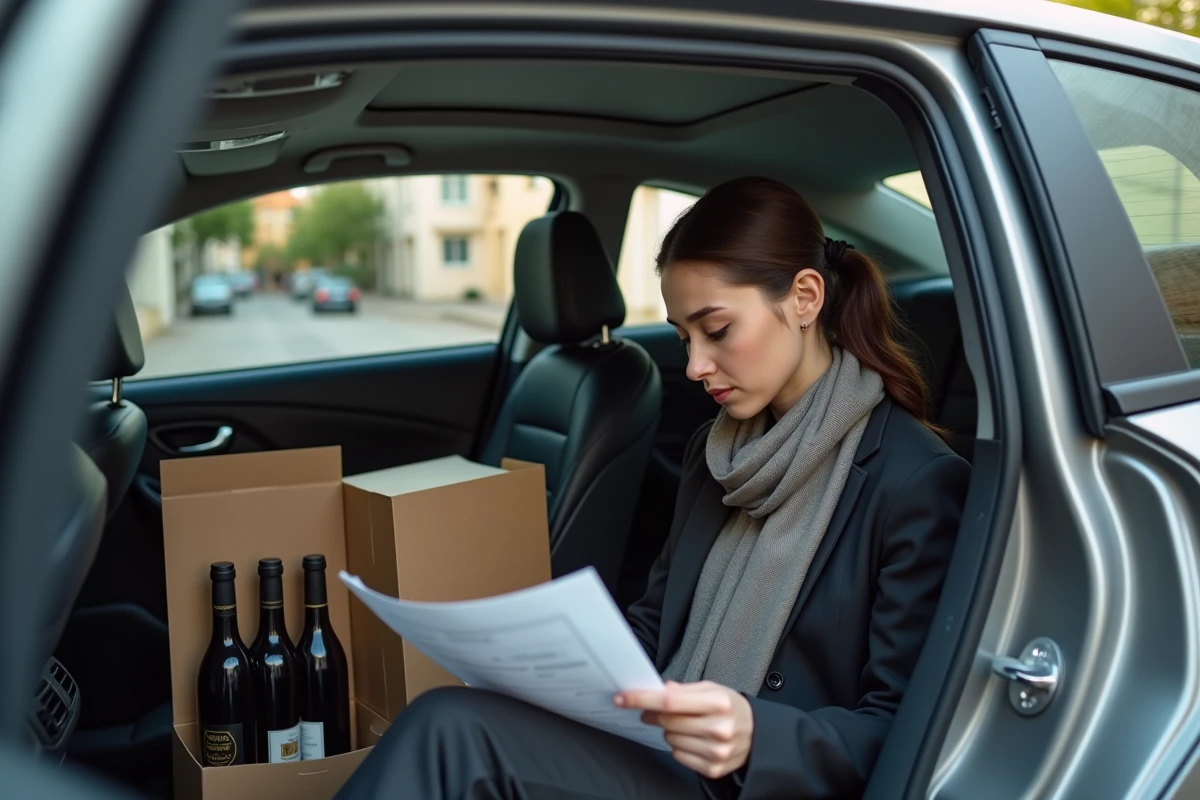
Practical tips for traveling smoothly with your bottles
Transporting wine by car requires some precautions. Wine does not tolerate heat or direct light, and even slight temperature changes can damage the best bottles. To ensure their preservation, maintain the cabin temperature around 10 to 14 °C, using a cooler or insulated bag if necessary. Avoid the trunk, which is too exposed, and prefer the back seat, protected from fluctuations.
Packaging should not be left to chance. Opt for sturdy cardboard boxes that can absorb shocks. Always place the bottles upright, cork up, to minimize the risk of leakage. On a long journey, take regular breaks in the shade to check the condition of the wine.
The receipt remains your best ally. It proves that the purchase is legal and that the cargo is not intended for resale. The authorized quantities allow for no exceptions: the wine transport regulations apply strictly, even for an oversight or an unintentional excess. Before crossing a border, inform yourself precisely about the local regulations.
Once arrived, let the bottles rest quietly for a few days. Wine shaken by transport needs time to settle and regain its qualities. This care for the product, well beyond mere regulatory compliance, promises the best surprises during tasting. With every journey, wine reminds us that patience and rigor are the true companions of pleasure.