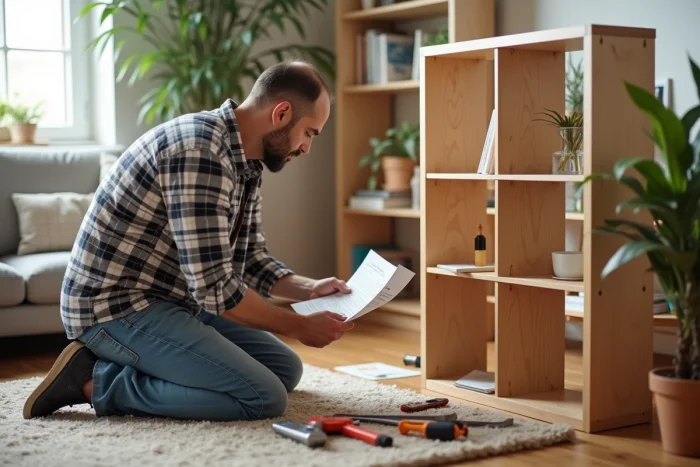
A poorly positioned tape measure skews all measurements, even with the most sophisticated tools. Universal screws are not suitable for all materials, despite their name. Manufacturers’ manuals often omit the tolerances for errors during assembly.
The choice of materials, surface preparation, and time management remain the main points of friction for starting off smoothly. Success relies less on strength and more on method and anticipating key steps.
The essential basics for starting DIY projects at home with confidence
Starting a home DIY project is primarily about organization and reflection. Before pulling out the screwdriver and drill, it’s important to accurately define the nature of the work to be done: simple refresh, layout, more extensive renovation, or regular maintenance. Planning makes all the difference, regardless of experience. Mapping out the areas involved, measuring every nook, anticipating the specifics of the interior: these are the true foundations of a controlled project.
To maximize your chances of success, it’s better to create a precise list: what materials to buy, which tools to gather? Focusing on simplicity and integrated storage optimizes every action and avoids the proliferation of unnecessary items. A rigorous management of space, often overlooked, transforms the way of living and enhances safety day by day. There are plenty of tips available, but experience shows that a well-prepared project rarely unfolds in haste.
Here are some reference points to start on the right foot:
- Start by examining the existing conditions before considering any modifications.
- Organize your tasks according to a logical progression, from structural work to finishing touches.
- Rely on specialized resources to refine your methods and avoid the most common pitfalls.
For further information, visiting the Wiki for Home website offers a wide range of advice tailored to each project and level. Teaching the right gestures, ensuring precision, supporting each step: these practices lay the groundwork for a home where every intervention enhances comfort and autonomy.
What tools and materials should beginners prioritize?
Before starting any work, choosing the right tools is the first condition for successfully completing your DIY projects. There’s no need to multiply gadgets: a few reliable instruments are enough to tackle the majority of DIY projects. The tape measure remains essential for accurate measurements, while a spirit level ensures straight installations. Add to this a set of screwdrivers, a multifunctional pliers, and a hammer: this is the solid foundation for managing everyday small tasks.
For cutting and assembling, equip yourself with a hand saw with a few spare blades and a miter box for precise cuts. Whenever handling tools or materials, wearing gloves and safety glasses is non-negotiable. A quality utility knife, a set of flat or socket wrenches, and a drill-driver complete the essentials to start without unpleasant surprises.
On the materials side, choose wood for its ease of use and versatility. A few boards, battens, or panels are sufficient for most home projects. Select screws, plugs, and adhesives according to the nature of the support, whether it’s a load-bearing wall or a lightweight partition.
To avoid unpleasant surprises, keep these recommendations in mind:
- Inspect the condition of each tool before use to ensure the accuracy of your actions.
- Take care of your equipment: a well-maintained tool works faster and more safely.
This initial selection of equipment opens the door to clean and safe realizations, whether it’s about repairing, arranging, or creating custom solutions, while minimizing errors and incidents.

Small tips and advice for successfully completing your first projects without stress
You don’t jump into a home DIY project on a whim. Before pulling out the drill or sander, take the time to create a clear list of steps to follow. Visualize the project as a whole: every detail matters, from preparation to the finishing touch. The materials and tools should adapt to the project, not the other way around. A tidy workshop promotes concentration and limits mistakes.
Practical tips for optimizing space and time
Here are some concrete tips for better organizing your DIY sessions:
- Prepare tools and spare parts in advance to avoid back-and-forth trips that interrupt progress.
- Always test a technique on a scrap piece or sample before moving on to the final step.
- Prioritize integrated storage to keep the space clear and easily find each accessory.
Decor trends inspire, but nothing replaces a concrete adaptation to your interior. Focusing on custom solutions, even for simple DIY projects, allows you to maximize every square meter and bring real personality to the home. Storage tips quickly prove invaluable for utilizing every area, especially with modular solutions. The tips for success don’t stop at technique: it’s also about observing, adjusting, and retrying without getting discouraged. Patience, in the end, remains the best ally of the DIY enthusiast, whether they are just starting out or already mastering the craft.