The string trimmer and brush cutter share a deceptive family resemblance: a motor, a drive shaft, a rotating cutting head. Both are used to cut vegetation where a lawn mower cannot reach. The confusion arises from this, and it can be costly when investing in the wrong tool for your land.
Cutting system: nylon line vs. blade, the criterion that separates the two tools
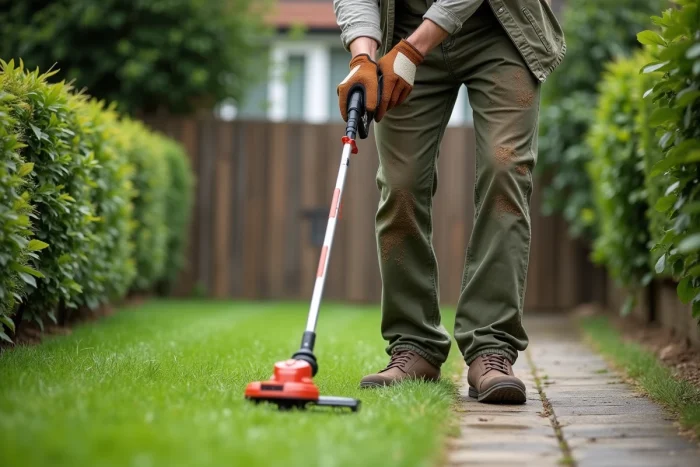
The string trimmer, also known as a weed whacker, works exclusively with a rapidly rotating nylon line. This line whips the grass and cuts it through impact speed. It’s sufficient for short grass, regrowth along a wall, or around tree bases.
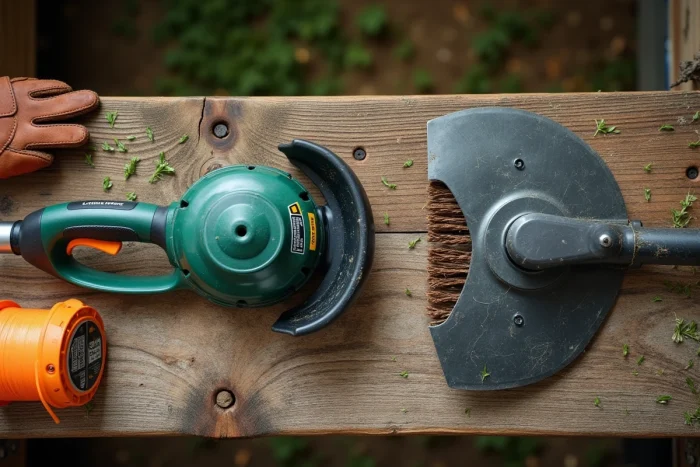
The brush cutter, on the other hand, accepts several types of heads: thick diameter nylon line, plastic blade, metal blade with two or three teeth, or even a shredding disc. This mechanical versatility allows it to tackle woody plants, thick brambles, or thickets that the nylon line simply cannot cut.
Understanding the difference between a string trimmer and a brush cutter starts with this point: the type of cutting head accepted by the machine determines the nature of the work that can be done.
A detail often overlooked: using a line that is too thin on a powerful machine accelerates engine wear. The line breaks faster, the head runs empty, and repeated jolts wear out the bearings. Conversely, fitting a thick line on a small electric weed whacker forces the motor beyond its capabilities.
Power and motorization: gas, battery, or corded depending on the terrain
The string trimmer is available in a corded version (electric on mains) and battery-powered. Both formats are suitable for small gardens, where finishing touches are done after mowing. The weight remains manageable, and handling is quick.
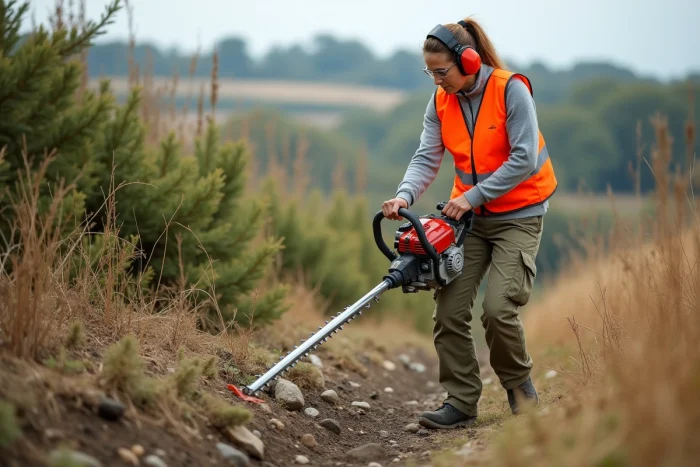
The brush cutter comes in gas (two-stroke or four-stroke engine) and high-capacity battery versions. The gas engine remains the benchmark for overgrown land, slopes, or large areas. Its energy reserve does not depend on battery life.
High voltage battery: the boundary blurs
Recent models of battery-powered string trimmers that come with interchangeable line and plastic blade heads complicate traditional classification. These hybrids can handle tall grass and some isolated brambles, but do not reach the capacity of a true gas brush cutter in an overgrown area.
For a mixed garden (well-kept lawn plus a semi-wild area), this type of device can avoid the purchase of two separate machines. However, in a completely overgrown area, it will show its limits in a matter of minutes.
String trimmer or brush cutter against brambles: the limits that product sheets do not mention
Buying guides compare power and line diameter. They rarely discuss what happens after cutting, especially on brambles and creeping plants.
The string trimmer cuts poorly through bramble vines, which wrap around the head. The brush cutter chops them more effectively, but this apparent efficiency poses another problem: the fragments of vines that fall to the ground act like cuttings. If the pieces are not collected, the bramble will regrow from each node in contact with the soil, sometimes more vigorously than before the intervention.
The method of working is as important as the machine:
- Let the bramble regrow after a first cut, then recut as soon as new leaves appear, to exhaust the root reserves
- Systematically collect the cut vines to prevent rooting in the soil
- Repeat the operation several times during the season rather than clearing everything in one go
This protocol works with both tools, but the metal-blade brush cutter facilitates successive passes over vegetation that has had time to strengthen between interventions.
Choosing between string trimmer and brush cutter: three concrete questions to ask
Before comparing technical sheets, a quick sorting can eliminate the wrong option.
- What type of vegetation dominates the land? If the answer is “grass and fine herbs along the edges,” an electric or battery-powered string trimmer is sufficient. As soon as woody stems, brambles, or tall grass exceeding knee height come into play, the brush cutter is necessary.
- What area needs to be treated in one session? Beyond a few dozen linear meters of edge, the comfort of a harness and the power of a gas engine make a real difference in fatigue at the end of the day.
- Will the tool be used year-round or only seasonally? A string trimmer stored in a garage between March and October does not justify a heavy investment. A gas brush cutter, on the other hand, requires winter maintenance (oil change, carburetor cleaning) that pays off with regular use.
The trap of the poorly calibrated “two-in-one”
Some manufacturers offer multifunction tools with interchangeable attachments (string trimmer, hedge trimmer, pruner). Versatility comes at the cost of weight and reliability: the connections between modules add vibrations, and each function operates at a level below that of a dedicated tool. For occasional use on a small area, this may be suitable. For serious maintenance, it is better to have two separate tools.
The final choice depends less on the brand or the displayed price than on the suitability of the cutting system to the actual vegetation of the land. A well-chosen string trimmer makes a garden immaculate in minutes. A well-equipped brush cutter transforms an overrun plot into a workable area. Confusing the two means ending up with a tool that struggles where the other would excel.