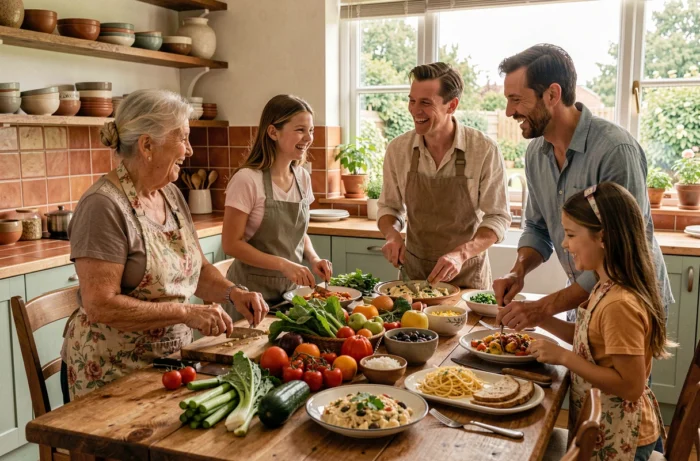
Single-parent, blended, same-sex, or adoptive families share a foundation of daily constraints that parenting guides rarely address from a material perspective. The weight of housing in the budget, rights to leave related to the birth or arrival of a child, the mental load of domestic organization: these subjects structure family life far more than generic advice on kindness.
Additional Birth Leave: What Modern Families Need to Check
The additional birth leave, which came into effect in 2026, applies to the spouse, partner in a civil partnership, or cohabitant of the mother, as well as adoptive or foster parents. The employer cannot refuse it or impose a postponement. This right must be exercised within nine months following the birth or arrival of the child in the household.
Its duration, one or two months depending on the case, far exceeds that of traditional paternity leave. For blended families or unmarried couples, this extension represents a concrete lever for organizing the first weeks.
From the employer’s side, implementation requires specific administrative procedures documented by Service-Public.fr. We recommend that concerned parents notify their employer in writing as soon as the pregnancy or adoption process is confirmed, to avoid any disputes regarding the timing of the leave.
This provision is aimed at various family configurations, making it a marker of institutional recognition of family diversity. The resources available for all families on Happy Maman allow for a deeper exploration of these practical daily issues.
Housing Budget for Single-Parent Families: An Underestimated Item
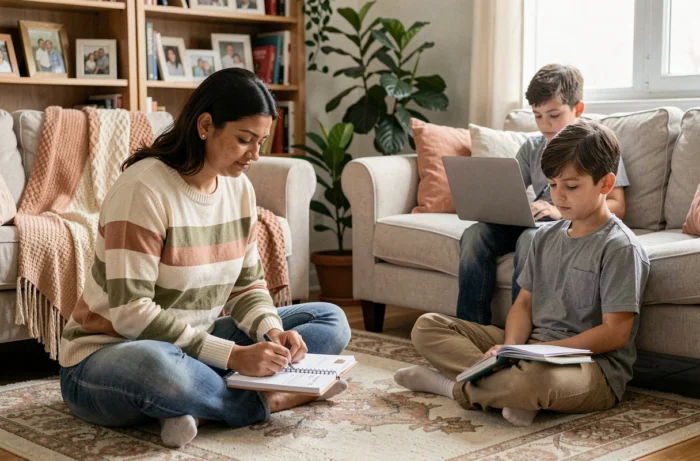
Single-parent families are among the households whose housing absorbs the largest share of the budget. More often renters, with lower incomes, they suffer a scissor effect between the cost of rent and the difficulty of accessing home ownership.
Housing weighs proportionally more heavily for a single parent than for a couple with equivalent incomes. This reality conditions all daily choices: neighborhood selection, proximity to schools, access to transportation, living space per child.
Three levers deserve systematic exploration:
- Check eligibility for housing assistance (APL, ALF) based on actual family composition, not just marital status
- Request public guarantee schemes like Visale, which cover single parents without a guarantor
- Anticipate the request for social housing as soon as separation occurs, as allocation delays often exceed several years in high-demand areas
Organizing family daily life starts with housing stability. Ignoring this budget item is like building on sand.
Cultural Diversity in Daily Life: Moving Beyond Decorative Approaches
Offering a dish from elsewhere or reading an illustrated book about a distant country does not constitute education in diversity. Raising children’s awareness involves regular and contextualized practices, not isolated events.
Books remain a primary support, provided they go beyond the folkloric register. An album that shows different family structures (foster families, grandparents raising their grandchildren, siblings from multiple unions) anchors diversity in the child’s experience rather than in exoticism.

World Cultural Diversity Day, promoted by UNESCO every May 21, provides a calendar excuse. But the challenge lies in continuity: integrating different stories, music, or languages into the weekly routine produces effects that isolated actions cannot achieve.
Adapting the Discourse to the Child’s Age
Before the age of three, a child perceives physical differences without assigning value to them. This is the period when parents lay the groundwork: naming differences with simple words, without embarrassment or emphasis.
Between the ages of three and six, questions become direct. Responding factually without dramatizing or minimizing remains the most effective stance. A child who asks why their friend has two dads expects a short and clear answer, not a sociology lesson.
After the age of six, moral reasoning becomes structured. Children can understand that families function differently without a hierarchy of value. Cooperative games and collective projects (cooking, gardening, shared DIY) become concrete vectors.
Everyday Tips for Blended Families and Atypical Configurations
The mental load in a blended family is not limited to managing schedules. It includes coordination between households, managing shared parental rights, and articulating sometimes contradictory domestic rules.
- A shared digital calendar accessible to both households reduces misunderstandings about custody weekends, school holidays, and medical appointments
- Defining house rules specific to each household, without seeking uniformity, avoids loyalty conflicts for the child
- Allowing for an adjustment period during transitions (arriving at the other parent’s home): letting the child settle into their room alone before starting shared activities
- Involving children in age-appropriate household tasks, regardless of the household, to maintain a sense of stability
These adjustments are not about comfort but prevention. Families that anticipate daily logistics significantly reduce tensions related to transitions between households.
The diversity of modern families does not call for a single model of organization. Each family configuration generates its own material and administrative constraints. Addressing them without taboo, using concrete tools rather than moral injunctions, remains the only sustainable approach.