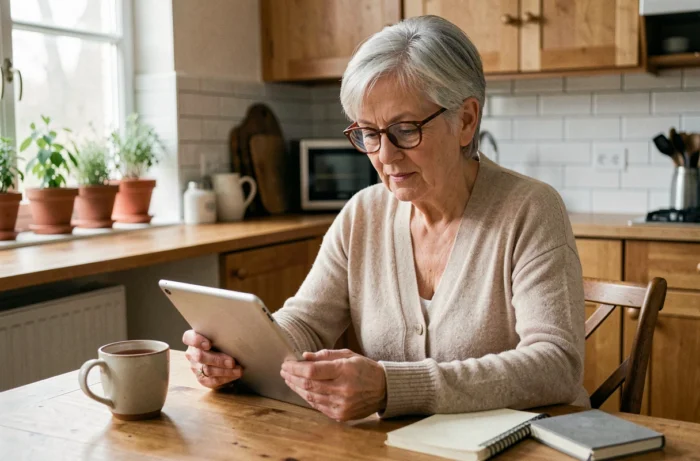
In France, the proportion of the population over 60 years old continues to grow, placing the daily lives of seniors at the center of public policies and family concerns. The “Aging Well” law, prevention programs led by pension funds, and departmental initiatives are gradually reshaping the support landscape. Improving the daily lives of seniors relies on concrete levers affecting health, housing adaptation, social life, and access to assistance.
Identifying Vulnerabilities in Seniors: Beyond Simple Health Assessments
Competitors widely address nutrition, physical activity, or home safety. A less explored angle concerns the early detection of vulnerabilities, which is crucial for the effectiveness of all other approaches.
The ICOPE program, inspired by the WHO, examines several functions: mobility, memory, vision, hearing, nutrition, and mood. Its goal is to detect difficulties before they become established losses of autonomy, and then to guide individuals to an appropriate professional. Experiments have been reported in France, particularly in certain pilot departments.
This type of dedicated assessment goes beyond general health advice. It allows for the cross-referencing of data that the primary care physician may not always explore during a standard consultation, such as the link between hearing loss and social isolation. Difficulty following a conversation in a noisy environment, for example, can lead to a gradual withdrawal that neither the senior nor their surroundings immediately perceive.
For individuals wishing to delve deeper into these topics and access reliable resources on daily life after 60, it is possible to consult the Info Seniors website, which gathers practical information tailored to each situation.
Departmental Public Service for Autonomy: A Service in the Process of Deployment
The “Aging Well” law provides for the establishment of a departmental public service for autonomy (SPDA). The idea is to create a single point of entry in each department for all questions related to loss of autonomy, whether for a senior, a caregiver, or a person with a disability.
The deployment is gradual. The organization and reception methods vary by department. Some areas already have operational counters, while others are still in the structuring phase. The most reliable starting point remains the departmental council or the CCAS (communal social action center) of one’s municipality.
This territorial heterogeneity poses a concrete challenge. A senior moving from one department to another may face different administrative circuits, changing contacts, and variable processing times. As long as the network is not homogeneous across the territory, the proactive approach of each individual or their entourage remains crucial to access existing services.
Assistance from Pension Funds for Seniors Classified as GIR 5 or GIR 6
Home assistance programs are often associated with the APA (personalized autonomy allowance), reserved for individuals classified in GIR 1 to 4, meaning those with significant loss of autonomy. However, retirees evaluated in GIR 5 or 6, considered relatively autonomous, do have recourse.
Depending on their pension fund and situation, these individuals can request home assistance or a one-time aid plan. This is particularly the case after hospitalization or during a temporary vulnerability episode. These aids are not automatic: their eligibility criteria vary from one fund to another.
- Contact your main pension fund (general scheme, MSA, etc.) to find out about available aids and eligibility conditions.
- Inquire about home return assistance programs after hospitalization, which are often unknown yet accessible under certain conditions.
- Check with the CCAS if any additional municipal aids exist, as some municipalities offer specific services (meal delivery, housekeeping) independently of national programs.
The most useful reflex is not to assume that no aid is possible before contacting your fund. Lack of knowledge about available programs is the primary barrier to their utilization, well before the eligibility criteria themselves.
Housing Adaptation for Seniors: What Concrete Choices
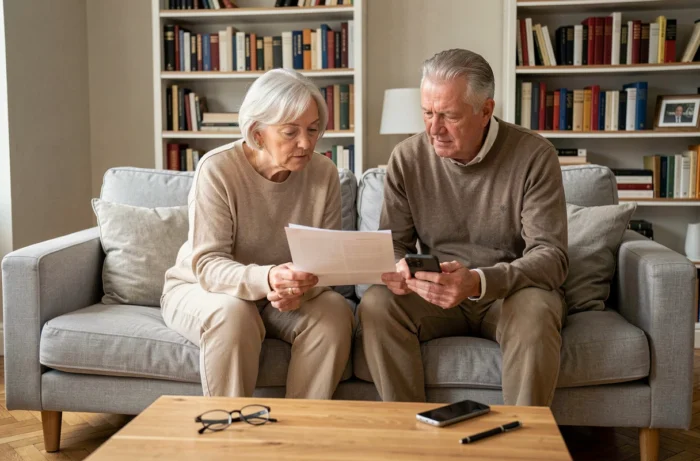
Housing adaptation is a recurring topic in advice for seniors, but it deserves to be approached from the perspective of real choices rather than a list of equipment to install.
The first question concerns timing. Adapting one’s home before difficulties arise is less expensive and allows for a calm selection of solutions. Waiting for a fall or hospitalization necessitates urgent work, often more costly and done under pressure.
The second question concerns the hierarchy of interventions. Not all adaptations have the same cost-effectiveness ratio:
- Removing obstacles on the floor (wires, unsecured rugs, door thresholds) costs almost nothing and significantly reduces the risk of falling.
- Installing automatic lighting in hallways and staircases represents a moderate investment for measurable nighttime safety gains.
- Replacing a bathtub with a walk-in shower is a heavier investment, but it is the adaptation most frequently recommended by occupational therapists.
- Home automation devices (motorized shutters, connected smoke detectors) provide additional comfort, but their usefulness depends on the individual’s level of autonomy.
The order of priority depends on each home and each individual. A diagnosis conducted by an occupational therapist or housing advisor can help avoid unnecessary expenses and target the most useful modifications for daily life.
Financial assistance exists for these works, particularly through the National Housing Agency (Anah) or certain pension funds. Access conditions and amounts vary based on income and the nature of the planned works.
Improving the daily lives of seniors in France is not just about applying a list of best practices. It is a process that benefits from being anticipated, personalized, and regularly reassessed. Early detection of vulnerabilities, knowledge of available aids, and gradual adaptation of the living environment form a coherent whole, provided one seeks information from the right contacts.